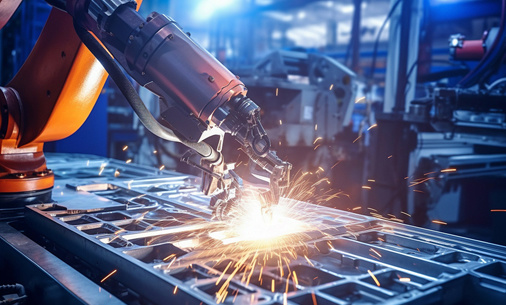

Welding robots: a powerful tool for upgrading the manufacturing industry
Release Time:
2024-12-12
As an important tool in modern manufacturing, welding robots have become an indispensable part of the production line with continuous technological advancements. This article will introduce the current applications and future development trends of welding robots in the manufacturing industry.
Welding robots play a crucial role in the manufacturing industry, significantly improving production efficiency, product quality, and workplace safety. With the rise of intelligent manufacturing, welding robots are gradually becoming more widespread and applied across various fields.
Firstly, welding robots possess high precision and reliability, capable of completing complex welding tasks and avoiding the impact of human factors on welding quality. Secondly, welding robots have high work efficiency, can operate continuously 24 hours a day, greatly shortening production cycles and saving labor costs.
In recent years, with the continuous development of artificial intelligence and machine learning technologies, the intelligence level of welding robots has been steadily increasing. By integrating vision systems and sensor technologies, welding robots can automatically detect weld quality, adjust welding paths, and further improve welding efficiency and quality.
In the future, with the rapid development of Industry 4.0, welding robots will gradually achieve upgrades in digitalization, networking, and intelligence, becoming an important part of smart factory production. At the same time, with continuous innovation and improvement in welding robot technology, their applications in automotive, aerospace, electronics, and other fields will become more widespread.
Overall, as a powerful tool for upgrading the manufacturing industry, welding robots will continue to play an important role, driving industrial transformation and the development of intelligent manufacturing.