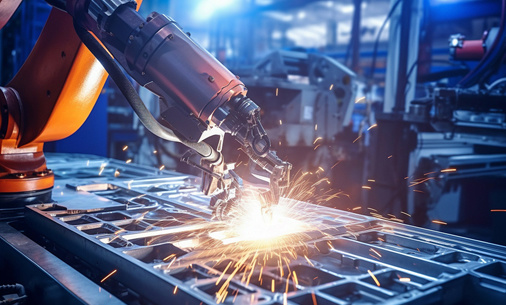

Welding Robots: The Stars of Future Manufacturing
Release Time:
2024-12-19
Explore how welding robots are transforming the manufacturing industry, enhancing efficiency and quality, and bringing revolutionary changes to the sector.
Welding Robots: The Rising Stars of Future Manufacturing
In today's era of rapid technological advancement, Welding Robots are undoubtedly shining stars in the manufacturing industry. With the advent of Industry 4.0, more and more companies are realizing the importance of automation, and welding robots, as a key component, are seeing their applications continuously expand.
The Rise of Welding Robots
Imagine welding tasks that once took hours can now be completed in just minutes! This is the efficiency revolution brought by welding robots. As the name suggests, a welding robot is a program-controlled mechanical arm capable of performing welding operations efficiently and precisely. It not only reduces labor costs but also improves welding quality, truly a "blessing" for the manufacturing industry!
How Do Welding Robots Work?
The working principle of welding robots is actually not complicated. They use preset programs and sensors to monitor various parameters during the welding process in real-time, such as temperature and pressure. This ensures that the welding quality is almost flawless. If human welders are artists, then welding robots are precise carving machines that perfectly reproduce the designer's vision.
Wide Range of Applications
You might ask, besides automotive manufacturing, in which other fields are welding robots used? The answer is, almost everywhere! From home appliances and electronics to aerospace, welding robots are ubiquitous. For example, in aerospace manufacturing, welding robots can operate stably in high-altitude and high-temperature environments, ensuring the reliability of every weld.
Advantages of Welding Robots
When it comes to the advantages of welding robots, they are countless! First, Welding Robots they can work intensively for long periods without fatigue; second, their operational precision is extremely high, almost eliminating errors caused by human factors; finally, welding robots can perform repetitive tasks, greatly improving production efficiency.
Unlimited Future Prospects
With the development of artificial intelligence and machine learning technologies, the intelligence level of welding robots will further increase. In the future, welding robots will not only complete simple welding tasks but also autonomously learn and optimize the welding process. This means welding robots will become "smarter" and capable of handling more complex welding tasks.
Conclusion: Embracing the Era of Welding Robots
In summary, the rise of welding robots is not only an inevitable result of technological development but also an important symbol of the manufacturing industry's transformation and upgrading. As more companies invest in the research and application of welding robots, we can expect greater industry changes brought by welding robots in the near future.
So, dear readers, quickly keep pace with this era and embrace the infinite possibilities brought by welding robots!