


The 12th China (Brazil) Export Brand Exhibition 2025
Brazil, here we come! Exhibition Project Name: The 12th China (Brazil) Export Brand Joint Exhibition 2025
2025/09/08

Working Principle of Welding Robots
What is the working principle of welding robots? Welding robots are automated mechanical devices used for welding operations. Understanding the working principle of welding robots during welding work can help stabilize welding quality, improve welding efficiency, and clarify the production cycle of products. Chenwei Robotics will guide you through this.
2023/02/25
What are the advantages of using industrial robots for welding?
How do industrial welding robots help users improve welding efficiency? Industrial welding robots are automated mechanical devices used for welding operations. Traditional welding faces challenges such as complex welding processes, low efficiency, difficulty in recruiting workers, and unstable welding quality. The application of industrial welding robots helps users solve these problems and invest in production using these robots. This article will introduce you to the advantages of industrial welding robots.
2022/08/18
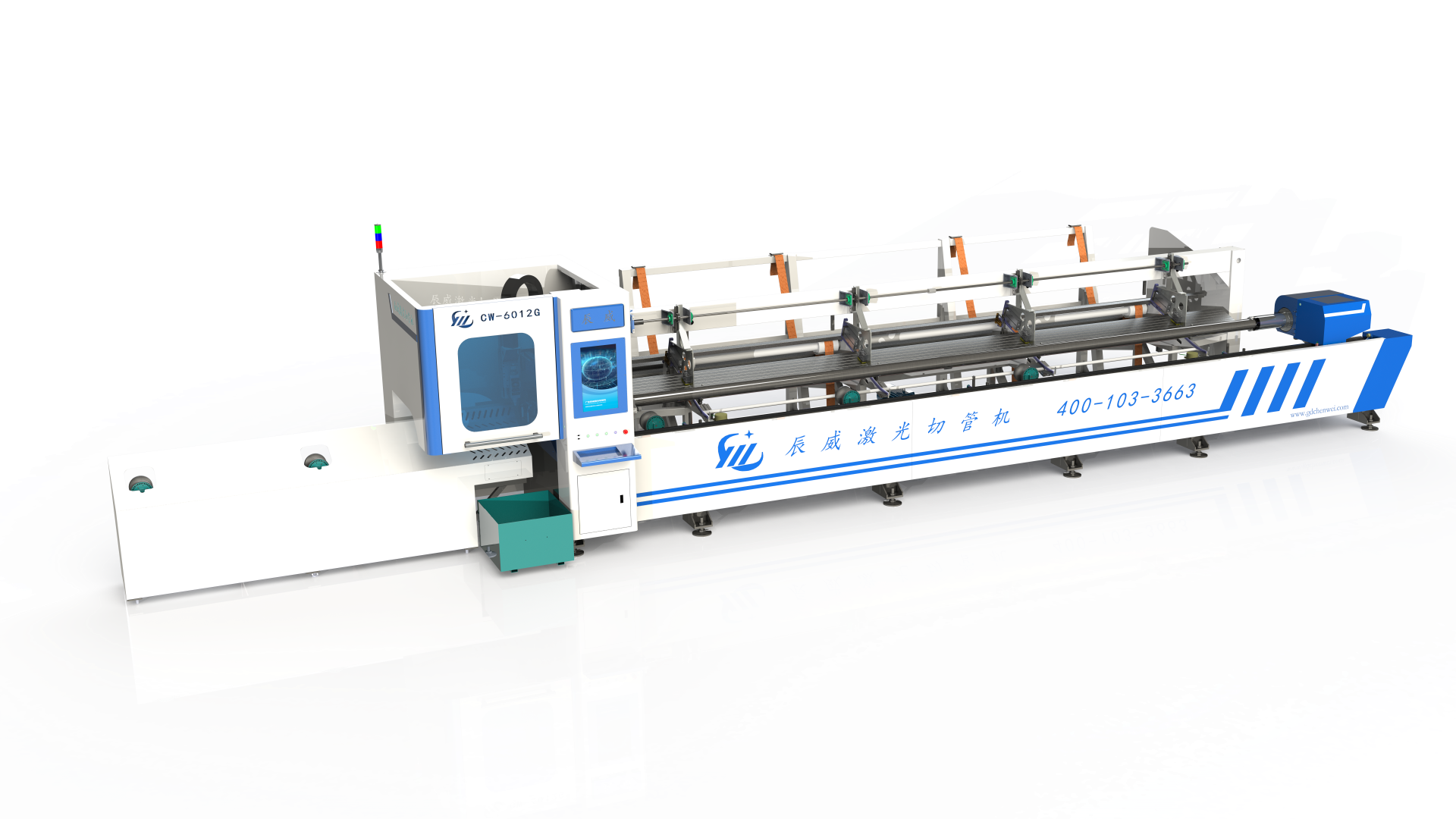
"High-Speed Laser Pipe Cutting: Innovations and Practical Applications"
High-speed precision laser pipe cutting machines represent a new generation of cutting equipment widely used in the metalworking industry. Their main advantages lie in high cutting speed, precision, and versatility, capable of meeting diverse material and shape cutting requirements. This article explores the working principles, technical features, and applications of these machines across various industries, analyzing their role in enhancing productivity and reducing costs.
2025/11/19

Heat treatment requirements for the welding structure of welding manipulators
Using Yaskawa welding robots for structural welding is a very common method. Generally, heat treatment is required after completion, and the use of welding manipulators is no exception; this step cannot be omitted. Especially for metals with strength grades above a certain range, post-weld heat treatment is essential.
2022/08/08

The Competition Is Shifting from Cutting Speed to the Last Cut of Every Tube
Conventional dual-chuck laser tube cutters leave 30–50 cm of remnant per tube due to the clamping blind zone. Chenwei raises per-tube usable yield through multi-chuck coordinated clamping, servo-controlled chuck avoidance, and nesting optimization—without compromising cut quality. In one documented retrofit, remnant was reduced to 50 mm and material utilization rose from 94.2% to 98.7%. Chenwei has announced zero tail as standard across its heavy-duty tube cutter lineup, paired with servo-following support brackets and intelligent nesting software that bring the last cut into the usable range wherever possible. The global zero tail tube cutter market was about RMB 2.3 billion in 2024, projected to reach RMB 3.54 billion by 2031, a CAGR of 6.3%.
2026/11/14

Saw Cutting vs Laser Tube Cutting: The Real Cost per Part
Sawing’s low price is misleading. Labor, consumables, tail scrap, and rework are the real costs. Laser tube cutting delivers stable joint gaps and one-setup processing, cutting total operating cost by 35%–55%. Yet sawing remains viable for simple straight cuts and very small batches. Compare cost per weldable joint—not price per cut.
2026/11/02

In October, Chenwei Intelligent Equipment exhibited multiple welding robot configurations and one high-speed laser tube cutter at the Foshan Tanzhou exhibition. Welding robots demonstrated fixture consistency and weld stability across automotive, construction machinery, furniture, and fitness workpieces. The tube cutter ran dry runs and live cutting on round, square, rectangular, and special-shaped tube, with optional AI line-laser compensation and weld seam recognition. Visitor interest shifted from standalone parameters to cut-to-weld cell integration and cycle-time matching.
2026/10/27
